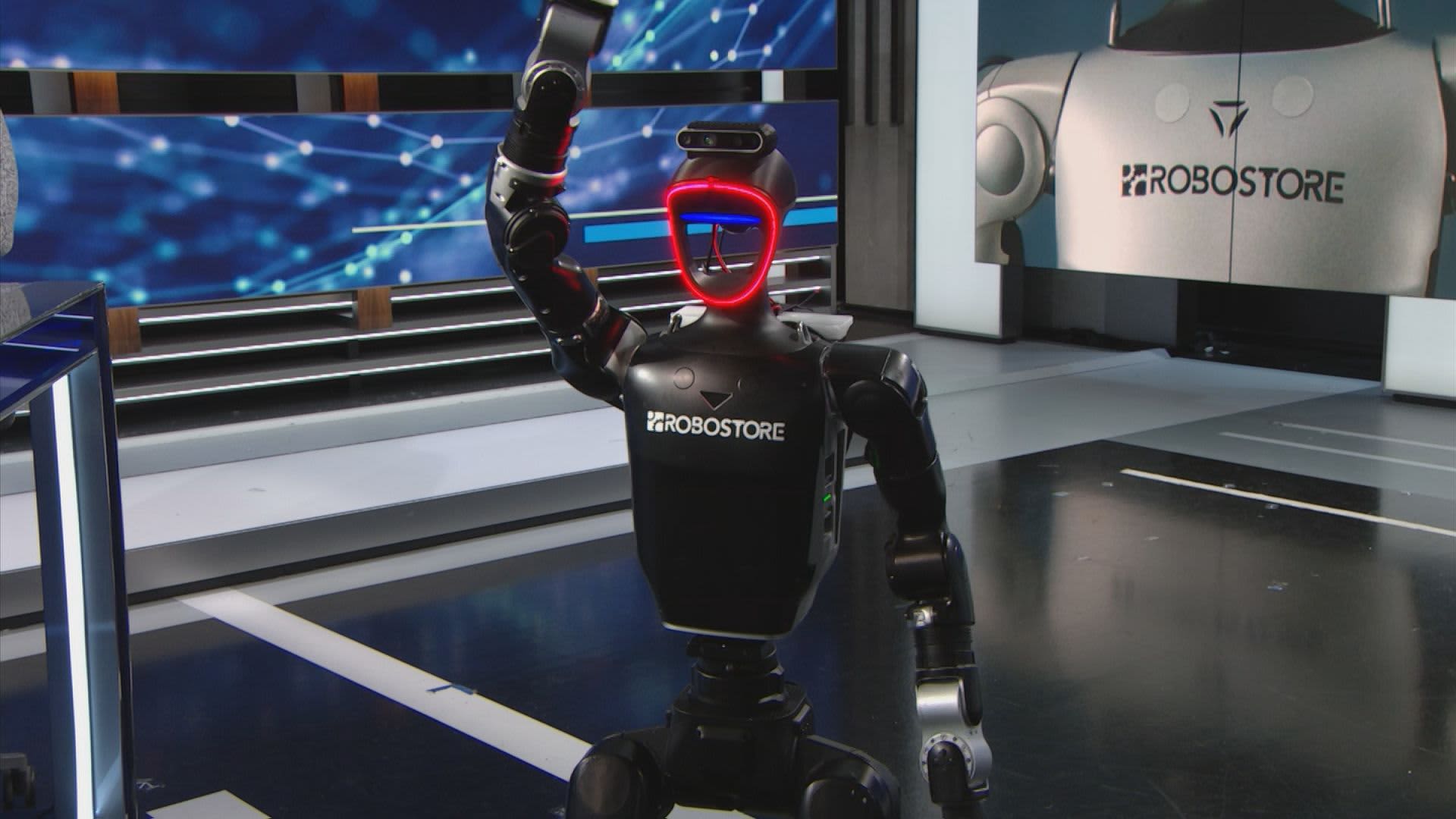
A recent CNBC segment put a humanoid robot in front of a familiar industry question: whether the current surge in artificial intelligence investment represents a bubble. The robot, identified as KOID and based on Unitree Robotics’ G1 humanoid platform, delivered a cautious, noncommittal response, emphasizing uncertainty rather than prediction.
Humanoid as a media-facing AI interface
The segment was framed as a novelty, but it reflects a growing pattern in which humanoid robots are used as physical embodiments of conversational AI. Rather than presenting new economic insight, the demonstration showcased the G1’s ability to engage in natural language dialogue, maintain balance, and operate reliably in a live broadcast environment.
For humanoid developers and operators, this type of exposure underscores how early deployments often focus on communication, demonstrations, and public interaction, well ahead of large scale industrial or service automation.
About the Unitree G1 platform
Unitree’s G1 is a compact humanoid designed to emphasize mobility, balance, and cost efficiency compared with larger research-oriented platforms. Publicly available information and prior demonstrations highlight several characteristics:
- Bipedal locomotion with dynamic balance control
- Upper body articulation suitable for gesturing and light manipulation
- Integration with vision and speech systems for interactive tasks
While the CNBC appearance did not introduce new technical specifications, it reinforced the G1’s positioning as a general purpose humanoid platform suitable for demonstrations, research, and early commercial experimentation.
Implications for the humanoid robotics sector
Using a humanoid robot to comment on the AI investment cycle is largely symbolic, but it points to a broader trend. Humanoids are increasingly presented as accessible, human-scale interfaces to complex AI systems, especially in media, education, and public-facing environments.
For decision-makers in robotics and automation, the takeaway is less about the robot’s opinion and more about the role such platforms are beginning to play. Visibility, reliability in unscripted settings, and conversational competence are becoming baseline expectations as humanoid robots move from labs into wider public and commercial contexts.