XPeng’s Iron Humanoid Robot Falls at Public Debut Event
Unexpected Fall During First Public Appearance
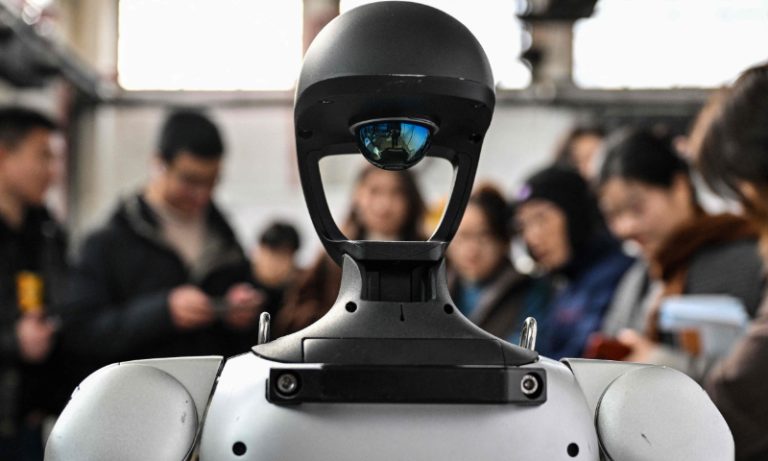
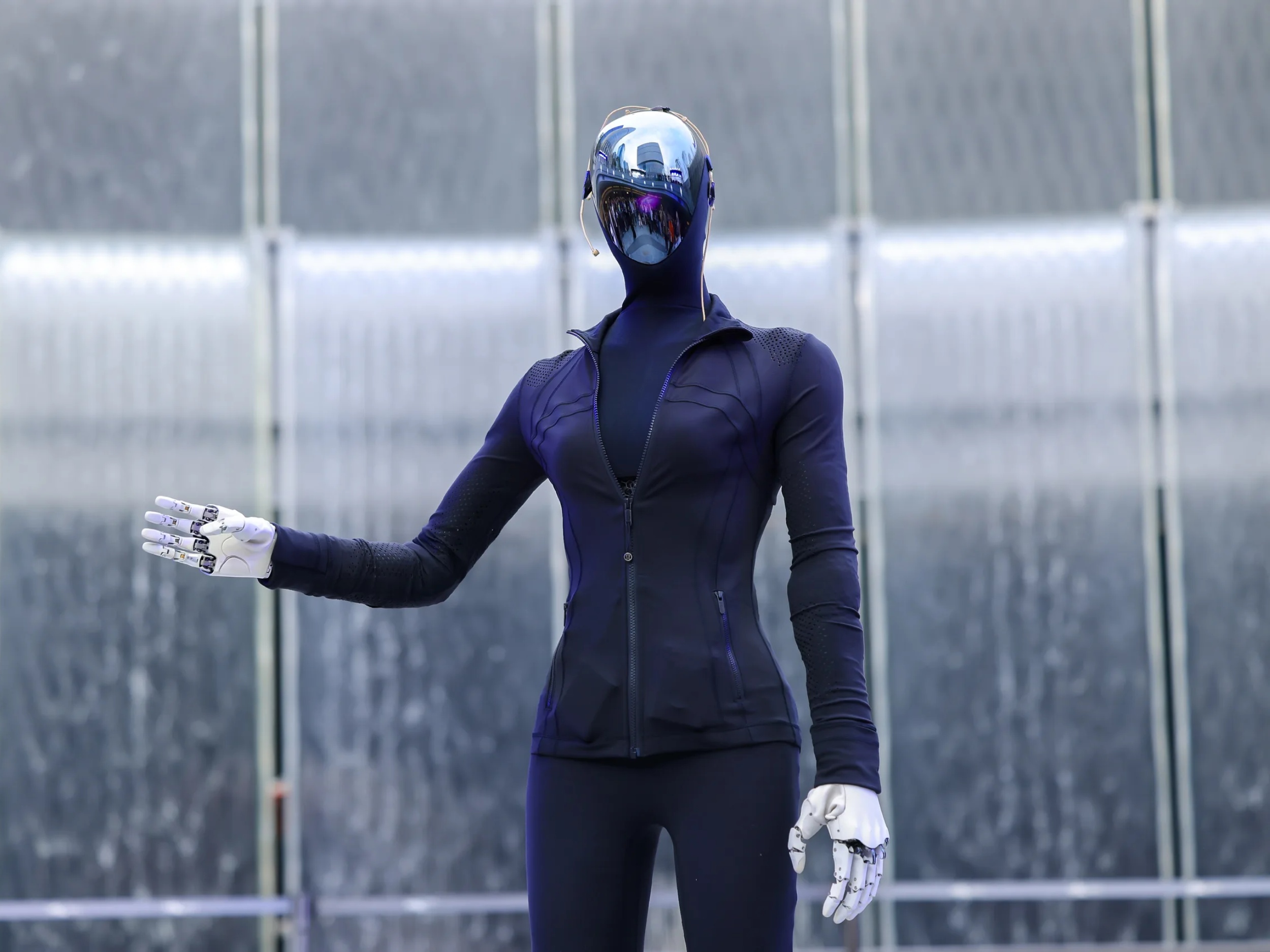
XPeng’s humanoid robot Iron experienced an unexpected fall during its first public presentation, drawing attention across the robotics community. The incident occurred on stage as the robot was being introduced, marking an awkward but revealing moment in the platform’s early development.
2026 Humanoid Robot Market Report
160 pages of exclusive insight from global robotics experts – uncover funding trends, technology challenges, leading manufacturers, supply chain shifts, and surveys and forecasts on future humanoid applications.

Featuring insights from
Aaron Saunders, Former CTO of
Boston Dynamics,
now Google DeepMind
2026 Humanoid Robot Market Report
160 pages of exclusive insight from global robotics experts – uncover funding trends, technology challenges, leading manufacturers, supply chain shifts, and surveys and forecasts on future humanoid applications.
The company’s leadership characterized the fall as a normal part of iterative engineering, noting that balance control and locomotion robustness remain active areas of refinement for humanoid systems. No injuries were reported, and the demonstration continued after the incident.
Early Stage Humanoid Development
Iron represents XPeng’s expansion beyond electric vehicles into embodied AI and humanoid robotics. While detailed technical specifications have not been fully disclosed, the platform is positioned as a general purpose humanoid designed to operate in human centric environments.
Falls during public demonstrations are not uncommon in early humanoid deployments. Bipedal locomotion requires tight integration of perception, state estimation, actuator control, and whole body motion planning. Minor disturbances, uneven surfaces, or control latency can lead to instability, particularly in systems that are still undergoing tuning and data collection.
Stability, Control, and Public Demos
For robotics practitioners, the incident underscores several persistent challenges in humanoid engineering:
- Reliable real time balance control under variable loads
- Robust foot placement and slip detection
- Graceful fall detection and recovery behaviors
- Safe operation in dynamic public environments
Public demonstrations introduce additional complexity compared to lab testing. Lighting conditions, stage materials, wireless interference, and unstructured human movement can all affect performance. As humanoid robots move from controlled research settings to live events and pilot deployments, validation under diverse conditions becomes critical.
Market Context
Chinese manufacturers have accelerated humanoid development over the past two years, with multiple platforms showcased for logistics, manufacturing, and service applications. Recent demonstrations by other vendors have emphasized dexterous manipulation and improved locomotion, increasing competitive pressure to demonstrate real world readiness.
XPeng’s entry into the field reflects a broader trend of automotive and mobility companies leveraging expertise in electric drivetrains, battery systems, and large scale manufacturing to enter humanoid robotics. However, translating automotive grade reliability to dynamic bipedal systems remains a significant technical leap.
Community Response and Next Steps
Online reactions to the fall were largely humorous, but industry observers focused on the broader engineering trajectory. Early stage failures, when transparently addressed, can provide valuable data for improving control algorithms and hardware resilience.
As Iron progresses toward more advanced demonstrations and potential pilot deployments, stakeholders will look for measurable improvements in balance recovery, uptime, and task performance. For operators and technical decision makers, consistent repeatability and safety validation will be key indicators of maturity.
The debut incident serves as a reminder that humanoid robotics remains an active development frontier, where public milestones often reveal both the promise and the practical constraints of current systems.