BMW to Deploy Humanoid Robots at Leipzig Plant
BMW will introduce humanoid robots to the production line at its Leipzig plant in Germany, marking the company’s first deployment of humanoids in a European factory. The pilot follows a trial in the United States last year and reflects a broader shift among automotive manufacturers toward AI powered humanoid systems for industrial use.
2026 Humanoid Robot Market Report
160 pages of exclusive insight from global robotics experts – uncover funding trends, technology challenges, leading manufacturers, supply chain shifts, and surveys and forecasts on future humanoid applications.

Featuring insights from
Aaron Saunders, Former CTO of
Boston Dynamics,
now Google DeepMind

2026 Humanoid Robot Market Report
160 pages of exclusive insight from global robotics experts – uncover funding trends, technology challenges, leading manufacturers, supply chain shifts, and surveys and forecasts on future humanoid applications.
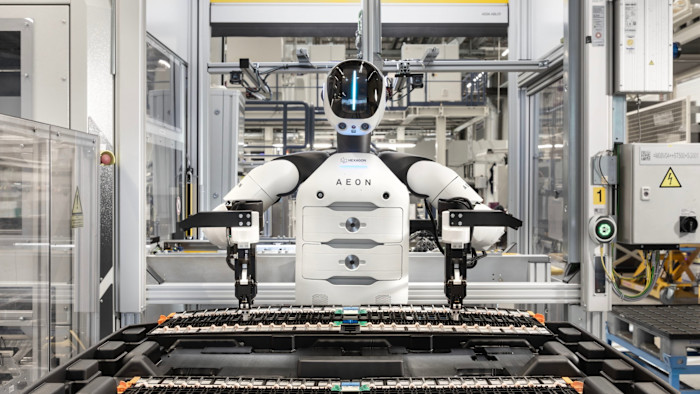
A single digit number of humanoid robots, supplied by Swedish technology group Hexagon, will be integrated into assembly operations and the production of high voltage batteries for electric vehicles. These tasks currently require employees to wear protective clothing and involve physically demanding, repetitive work.
From US Trial to European Deployment
The Leipzig project builds on a pilot conducted at BMW’s Spartanburg plant in South Carolina. During that trial, humanoid robots placed sheet metal parts for welding used in more than 30,000 vehicles over a ten month period. The robots operated in ten hour shifts, five days a week.
According to BMW, the sheet metal placement task required high speed and accuracy and was physically exhausting for human workers. The company positioned the humanoids as a complement to existing automation systems rather than a replacement, with the stated goal of relieving employees and improving working conditions.
The Leipzig deployment is scheduled to launch this year following a test phase in April. BMW production chief Milan Nedeljković said digitalisation is central to maintaining competitiveness in Europe and globally. He is set to become the company’s chief executive in May.
Strategic Rationale for Humanoids
BMW indicated that expanding the use of humanoids could eventually allow it to bring additional production steps in house that are currently handled by suppliers. Michael Ströbel, head of process management at BMW, said the technology provides an opportunity to internalise more manufacturing activities.
The move aligns BMW with other global automakers exploring humanoid robotics. Tesla, Hyundai, Toyota, Mercedes Benz and Ford have all announced pilots or tests involving humanoid systems in factory environments. Mercedes Benz has used humanoids for material transport and quality checks in Berlin, while Hyundai’s robotics unit Boston Dynamics is developing a new version of its humanoid platform intended for production plant deployment from 2028.
For automotive suppliers facing weaker demand and increased competition, humanoid robotics also represents a potential growth area. Components manufacturers such as Schaeffler have signed agreements with humanoid start ups including Germany’s Neura Robotics and the UK based company Humanoid to purchase robots and supply components.
Industrial Context
The automotive sector has long relied on fixed industrial robots for welding, painting and material handling. Humanoid robots are being evaluated for tasks that require greater flexibility, mobility and compatibility with human designed workspaces. Their human like form factor allows them to operate within existing production layouts without extensive retooling.
Industry forecasts cited by Morgan Stanley estimate that the humanoid robotics market could reach 5 trillion dollars by 2050, driven in part by manufacturing adoption. BMW’s Leipzig pilot will serve as an early indicator of how humanoid systems perform in European automotive production under real world conditions.
Source: Original article